How to Score Sales Calls and Mine Transcripts with AI
A manager listens to two calls this week and tries to guess why deals are being lost. The rest of the week's calls never get heard. The notes in the CRM are thin. The next coaching session is based on a hunch.
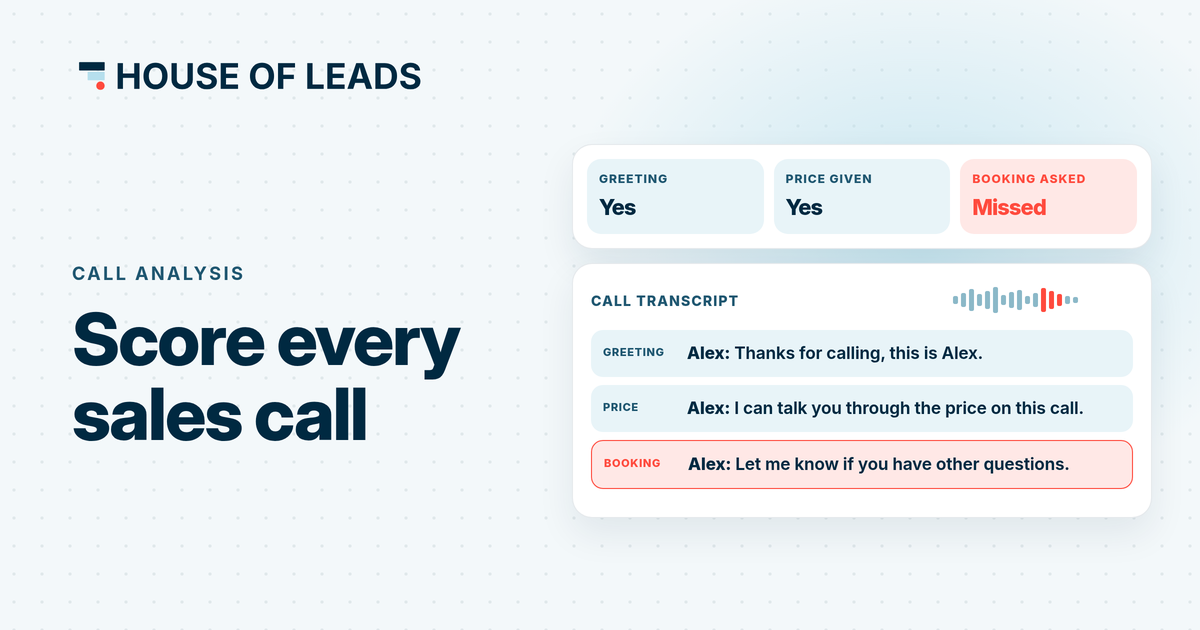
AI call analysis is a way out of that guesswork. It transcribes the conversation, scores it against a playbook, and lets you mine the transcripts for patterns. Used well, it shows which step is slipping: the greeting, the price, the booking, the next step. Used badly, a single score gets treated as the truth, and a person gets blamed for a number the model cannot fully explain.
The aim is not to replace the manager. The aim is to give the manager every call, not two, and a method for reading them.
What conversation intelligence actually is
Conversation intelligence is the practice of recording, transcribing and analysing sales conversations so a team can see what happened, not only what someone remembered to type. AI call analysis is the part that scores those conversations and pulls themes out of the text.
The usual promise is simple. Every call is transcribed. The model checks the transcript against a list of steps you already care about. A summary and a score land in the CRM, with a clip or a quote that shows why. That is useful. It is also incomplete if nobody reviews the quotes, and if the score is used as a verdict rather than a prompt.
Keep this distinct from a general chatbot. Conversation intelligence looks at calls and meetings you already had. It does not answer the phone for you, and it does not replace the person who has to ask for the booking.
How to score a sales call without treating the score as truth
Start with a playbook your best people already use, even if it only lives in their heads. Write it down as a short checklist.
Then score every call against that list, not against a vague "good" or "bad". A call can be warm and still miss the booking. A call can feel clumsy and still do the important steps. The score should tell you which steps were present, which were missing, and where to listen first.
The model can be wrong. Accents, two people talking at once, a poor recording, or a joke taken literally will throw a line off. That is why the score must point back to a moment in the transcript. If you cannot click through to the sentence that triggered the flag, you do not have analysis. You have a number.
How to mine the transcripts
Scoring tells you what was missed on one call. Mining the transcripts tells you what keeps coming up across the week.
Scoring a call | Mining the transcripts | |
|---|---|---|
What it tells you | What was missed on one call | What keeps coming up across the week |
What you start with | A playbook written as a short checklist | A set of calls with a clear outcome, such as twenty lost deals |
What you look for | Which steps were present, which were missing, and where to listen first | Repeats, tagged the same way each time: the main objection, the moment the next step was asked for, the promise that was made, and whether a follow up was agreed |
Pick a set of calls with a clear outcome. Twenty lost deals is a better starting set than every call you have ever recorded. Tag the same things each time: the main objection, the moment the next step was asked for, the promise that was made, and whether a follow up was agreed. Then compare those tags with a set of won deals from the same period.
You are looking for repeats. If price comes up late, and the booking is never asked for, that is a coaching theme. If your best reps use a short phrase that others never use, write it into the playbook. If people keep asking a question the website does not answer, that is a page or a script problem, not a "try harder" problem.
Write the findings back into the CRM as facts, not as vibes: objection, next step, owner, date. The point of the mine is that next week's team can see it without sitting through the same calls again.
One theme per week is enough.
If you try to fix everything the model highlights, nobody will change anything.
What the numbers can and cannot tell you
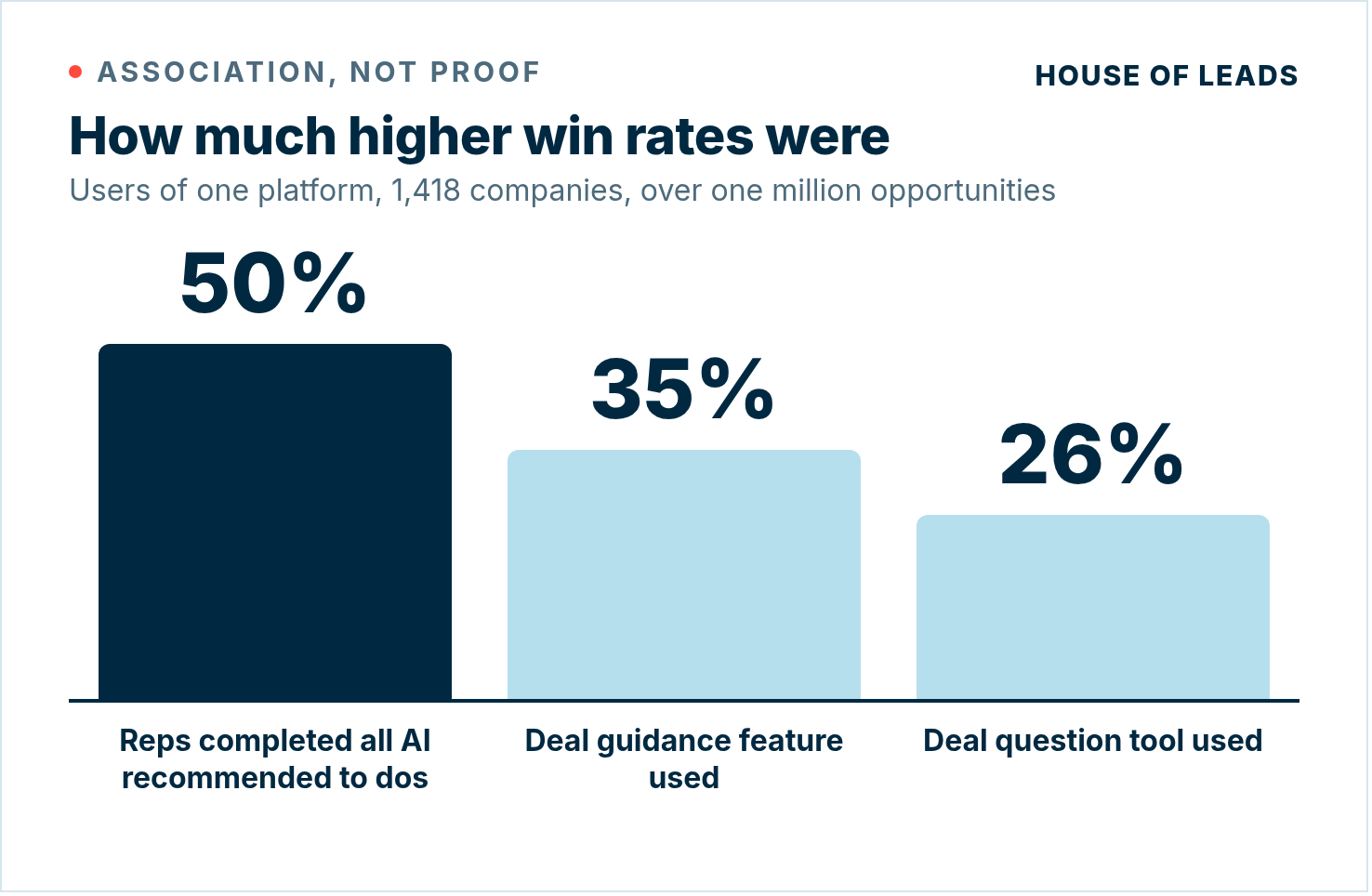
In one study of more than one million sales opportunities across 1,418 companies that already used AI features on a single conversation intelligence platform, win rates were 50% higher in deals where reps completed all of the AI recommended to dos, compared with deals where they did not. When a deal guidance feature was used, win rates were 35% higher. When a deal question tool was used, win rates were 26% higher. Those figures come from users of that platform, and they show an association, not proof that the same lift would appear in every business.
The same researchers have also reported that reps said they spend an average of 12.1 hours each week writing emails. That is a reminder of why call notes and follow up eat the week, not a promise that a tool will give those hours back.
Wider surveys of AI at work point in the same cautious direction. In a survey of 1,719 respondents in 97 countries, 37% said AI had contributed at least some EBIT impact in the business, a share that had barely moved from the year before, even as more of those businesses were scaling AI. Individual productivity can rise without the business automatically seeing a clean return. The same is true of call analysis. The value appears when the team acts on what the transcripts show.
What to demand in a build
Ask to see the playbook the calls will be scored against, and who can change it. Ask how the transcript, the score and the summary land in the CRM. Ask how a manager jumps from a flag to the exact moment in the call.
Ask what is recorded, how long it is kept, and how customers are told.
Then agree the weekly habit before the software goes live. Who reviews the missed steps. Which theme is coached. What gets written back into the playbook. Without that habit, you will have a dashboard and the same two calls still getting a listen.
A simple way to start
If you want every sales call scored against your playbook, and a clear way to mine the transcripts for why deals are won or lost, start with a consult. We will look at how calls run today, which steps should be scored, and how the notes should land for your team.